What Is A CRM System?
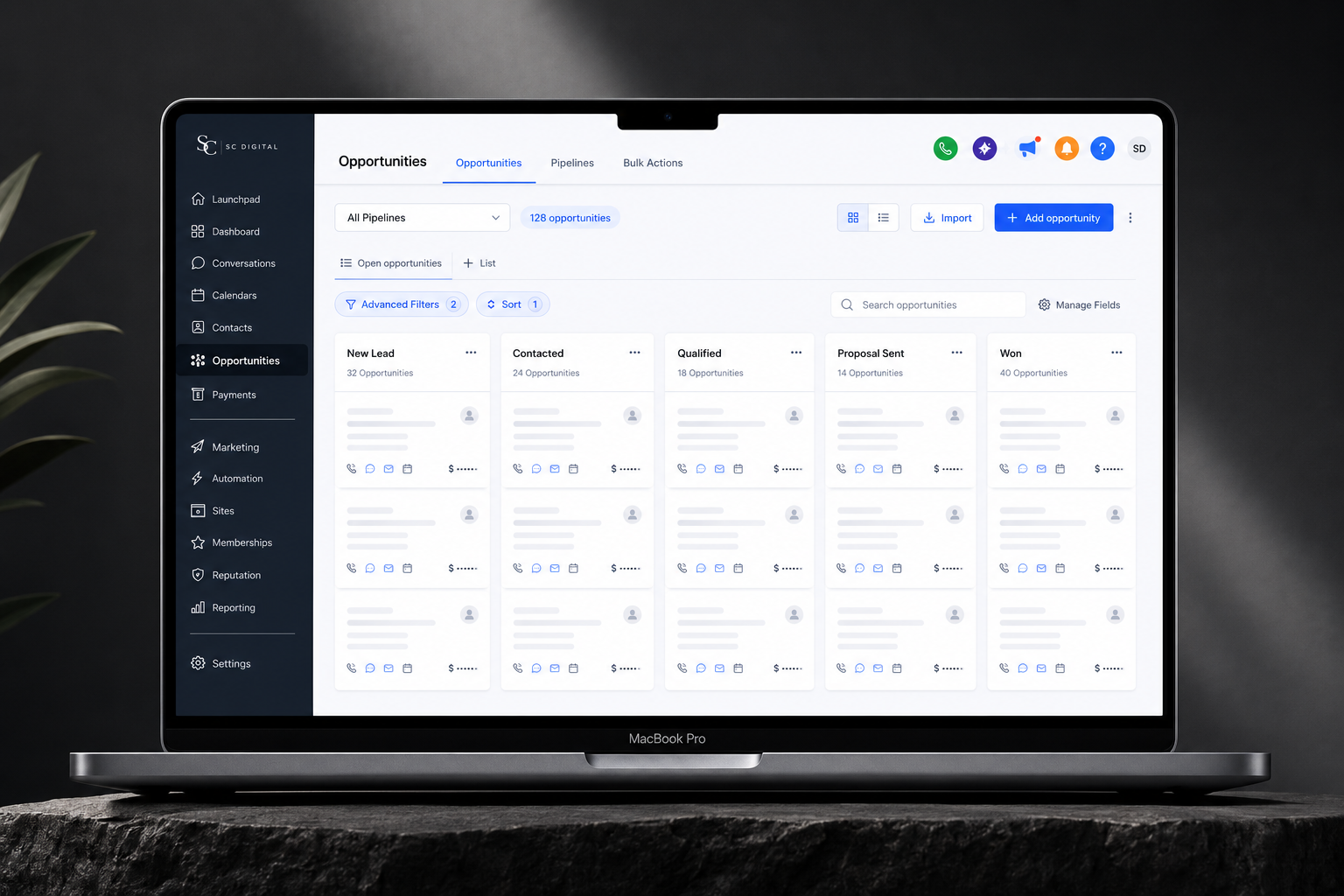
A CRM system is the place where every lead, conversation, appointment and sales opportunity is organized.
Instead of managing leads through text messages, missed calls, sticky notes, emails and memory, a CRM gives the business one clear system to track what is happening.
For a service business, this can include new leads, contacted leads, follow-ups, appointments booked, estimates sent, closed customers and lost opportunities.
Why Most Service Businesses Lose Leads
Many businesses spend money to generate leads, but they do not have a clean process for handling those leads after they come in.
A prospect fills out a form. The business gets busy. The call gets delayed. The message is forgotten. The lead becomes cold.
This is where revenue gets lost.
Many businesses think they need more leads. In reality, they often need a better system for handling the leads they already have.
Common Lead Management Problems
- Leads are not contacted fast enough
- No one knows which leads were followed up with
- Appointments are not properly tracked
- Old leads are never reactivated
- Sales conversations are not organized
- There is no clear pipeline for the team
The Cost Of Slow Follow-Up
Speed matters because interest fades quickly.
When someone requests information, books a consultation or asks for an estimate, they are actively thinking about the service. The longer the business waits, the more likely that person is to lose interest or contact a competitor.
A CRM helps reduce that delay by creating notifications, tasks, reminders and automated messages.

Lead Pipelines Explained
A lead pipeline is a visual structure that shows where every opportunity stands.
Instead of guessing what is happening with each lead, the business can see the full sales process at a glance.
Example CRM Pipeline
- New Lead
- Contacted
- Follow-Up Needed
- Appointment Booked
- Estimate Sent
- Closed
- Lost
This structure makes it easier to understand where leads are getting stuck and where the sales process needs improvement.
A CRM does not only organize leads. It shows the business where revenue is being created and where opportunities are being lost.
Automation & Follow-Up
Automation helps businesses follow up consistently without relying only on memory or manual effort.
This can include SMS reminders, email follow-ups, appointment confirmations, missed call responses and lead reactivation campaigns.
Useful CRM Automations
- Instant SMS after form submission
- Email confirmation after booking
- Internal notification for new leads
- Reminder before appointments
- Follow-up sequence for leads who did not answer
- Reactivation message for old leads
The goal is not to make the business feel robotic. The goal is to make sure every lead receives a professional and consistent response.
Why CRM Matters With Meta Ads
Meta Ads can generate attention and leads, but the CRM is what helps turn those leads into actual opportunities.
Without a CRM, it becomes difficult to know which ads are producing real customers and which leads are only filling out forms.
With a CRM, the business can track not only cost per lead, but also appointment rate, show-up rate, close rate and revenue generated.
Why CRM Matters With Landing Pages
Landing pages and CRM systems work together.
The landing page captures the lead. The CRM organizes the lead. The follow-up system moves the lead closer to becoming a customer.
When these pieces are connected properly, the business gets a cleaner view of the full customer journey.
Common CRM Mistakes
A CRM only works when the system is simple, clean and actually used by the business.
- Creating too many pipeline stages
- Not updating lead status
- Using automation without a clear strategy
- Not assigning responsibility to team members
- Failing to track where leads come from
- Not following up with old leads
The best CRM setup is not always the most complicated one. It is the one the business can use every day.
Frequently asked questions.
What is a CRM?
A CRM is a system used to organize leads, customer information, appointments, follow-ups and sales opportunities.
Do small service businesses need a CRM?
Yes. Even small businesses can benefit from a CRM because it helps prevent missed leads, forgotten follow-ups and disorganized sales conversations.
How fast should leads be contacted?
Leads should be contacted as quickly as possible while their interest is still high. Fast follow-up can make a major difference in conversion rate.
Can a CRM automate follow-up?
Yes. A CRM can automate SMS messages, emails, reminders, notifications and appointment confirmations.
Can a CRM improve close rates?
A CRM can improve close rates by helping the business respond faster, stay organized and follow up more consistently.
Final Thoughts
A CRM system is not just software. It is the structure behind the sales process.
For service businesses, better follow-up can create more revenue from the same amount of leads.
The businesses that grow consistently are not only focused on getting more attention. They are focused on building systems that turn that attention into booked opportunities, sales conversations and real customers.